



Price: $1,779.99
(as of 2026-10-20 05:17 GMT+0000 – Details)

Processor Performance
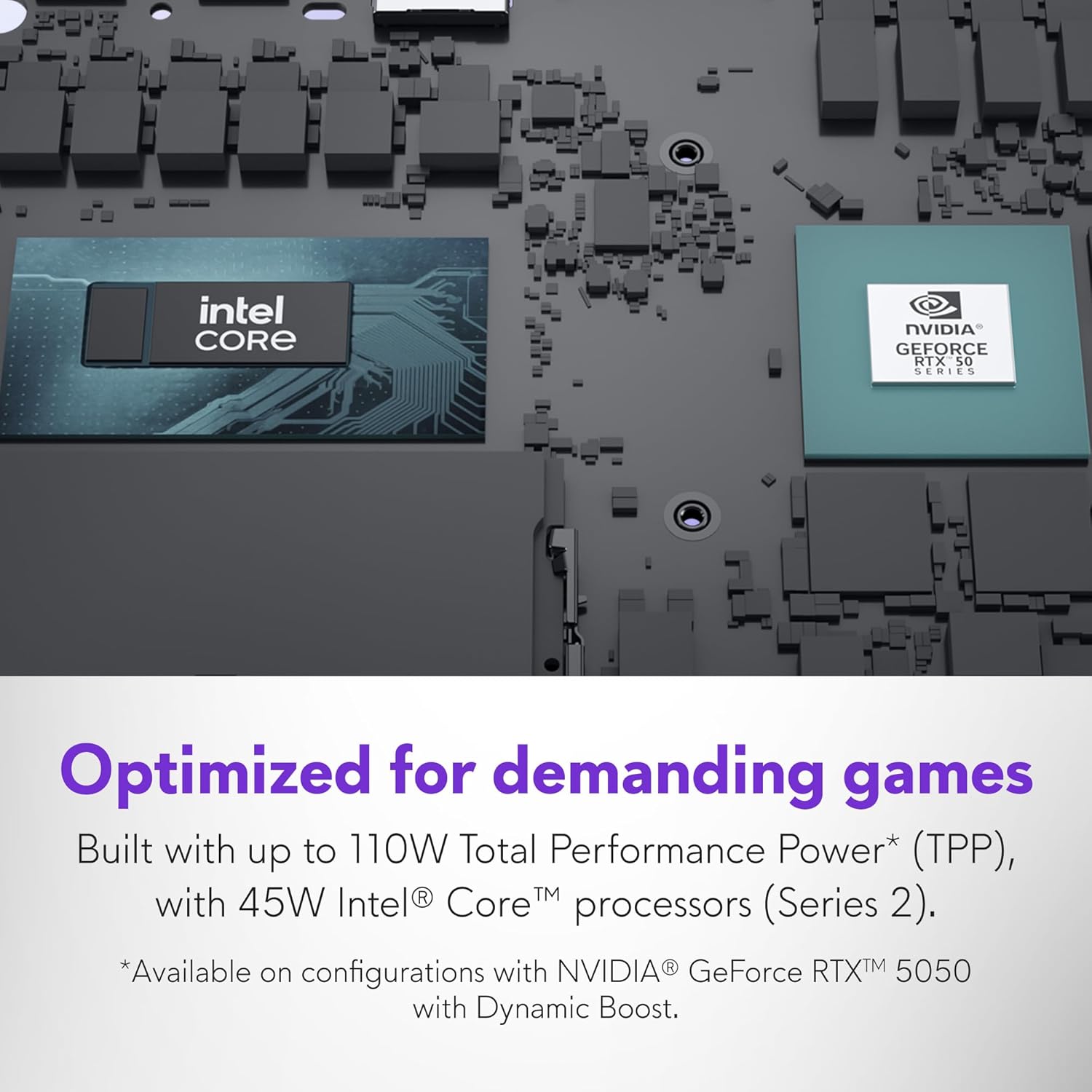
The laptop is powered by an Intel Core 7 240H 10‑core CPU that combines six performance cores and four efficient cores for a total of 16 threads. With a maximum turbo frequency of 5.2 GHz and 24 MB of Smart Cache, the chip can sustain high single‑thread speeds for game logic while the efficient cores handle background tasks and power‑saving workloads. In practice this architecture delivers strong frame‑rate consistency in modern titles and smooth multitasking when streaming or running productivity apps alongside a game. The main limitation is thermal headroom: sustained all‑core loads will push the cooling system, so prolonged heavy sessions may see modest frequency scaling unless the chassis airflow is adequate.
Graphics Capability
An NVIDIA GeForce RTX 5050 with 8 GB of GDDR7 memory provides the discrete graphics engine. The newer GDDR7 interface raises memory bandwidth, which benefits high‑resolution textures and ray‑tracing workloads at the native 2560 × 1600 resolution. The 8 GB VRAM pool is sufficient for most current games at high settings, but future titles that demand larger texture pools could become a bottleneck. Power draw of the RTX 5050 is moderate, allowing the laptop to stay within its thermal envelope while still delivering playable frame rates with DLSS and ray‑tracing enabled.
Memory and Storage
The system ships with 32 GB of DDR5‑5600 RAM in a dual‑channel configuration, giving ample bandwidth for both gaming and content‑creation workloads such as video editing or 3D rendering. The 1 TB PCIe NVMe M.2 SSD offers fast sequential read/write speeds, reducing game load times and accelerating OS responsiveness. Both memory and storage are soldered or limited to a single M.2 slot, so future upgrades would require replacing the existing modules rather than adding more, which may restrict long‑term expandability for power users.
Display Characteristics
The 16‑inch WQXGA panel (2560 × 1600) runs at 120 Hz with a 300‑nit peak brightness, 100 % sRGB coverage, anti‑glare coating, and ComfortView Plus low‑blue‑light technology. The high refresh rate smooths motion in fast‑paced games, while the 16:10 aspect ratio provides extra vertical space for productivity. However, 300 nits limits HDR performance and outdoor visibility, and the panel lacks a wide‑gamut option such as DCI‑P3, so color‑critical work may require an external monitor.
Connectivity and Ports
Wireless connectivity uses a MediaTek Wi‑Fi 7 (2×2) module with Bluetooth 5.3, delivering low latency and high throughput for online gaming and peripheral pairing. The port selection includes two USB 3.2 Gen 2 Type‑C ports (one supporting Power Delivery and DisplayPort, both at 10 Gbps), two USB 3.2 Gen 1 Type‑A ports (5 Gbps), an RJ‑45 Ethernet jack, HDMI 2.1, and a 3.5 mm combo audio jack. The dual Type‑C ports enable simultaneous charging and external display output, but the absence of Thunderbolt 4 or a second HDMI port may limit multi‑monitor setups for some users.
Additional Features and System Balance
Rounding out the package are a per‑key RGB backlit keyboard, a 720p HD webcam, and Windows 11 Pro pre‑installed. The keyboard offers comfortable travel for extended typing sessions, while the webcam is adequate for video calls but not for high‑quality streaming. Windows 11 Pro adds enterprise‑grade security features such as BitLocker and Remote Desktop. Overall, the hardware mix targets a high‑performance gaming experience with solid productivity credentials, though the relatively modest battery capacity typical of 16‑inch gaming chassis means unplugged runtime will be limited under load.